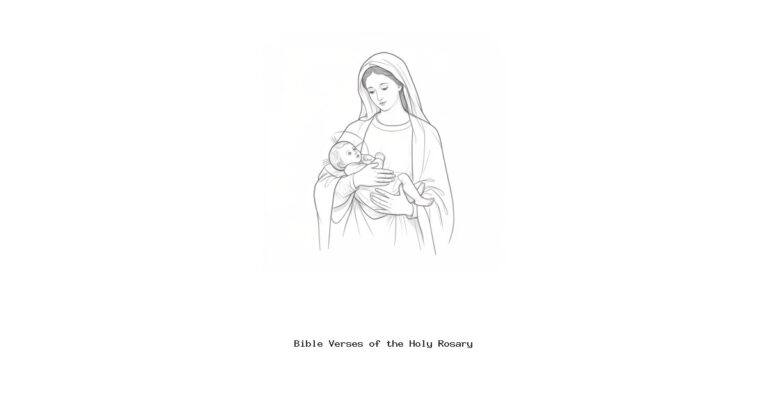
In the Catholic tradition the Holy Rosary is more than a chain of prayers; it is a school of contemplation that invites the faithful to enter the mysteries of Christ through the gaze of Mary. The Rosary binds Scripture to prayer, memory to faith, and history to salvation. Mary is not merely an object of devotion but a living guide who points us to her Son and teaches us to listen to the Word. By meditating on the events of Jesus life and Marys participation in them, we grow in virtue, trust, and discipleship. The New American Bible Revised Edition NABRE grounds these reflections in the sacred text and the teaching of the Church, reminding us that true prayer arises from encounter with the living God. When prayed with humility, the Rosary becomes a powerful means of spiritual renewal, helping us to discern Gods presence in everyday life and to cooperate more fully with his plan of salvation.
What Does the Bible Say About Bible Verses of the Holy Rosary?
Scripture provides the foundational verses that form the pillars of the Rosary. The greeting to Mary in Luke 1 28 and the blessing in Luke 1 42 are the scriptural roots for the Hail Mary, inviting us to cherish Gods grace and to acknowledge Mary as the mother of Jesus and of the Church. The Nativity narratives in Luke 2 emphasize the incarnation and the poverty of the tender newborn, which are celebrated in the first joyful mysteries. Jesus words and actions in Cana, in baptism, and in the Paschal mystery offer a Christ centered narrative that the Rosary seeks to contemplate in its modern form.
Jesus own teachings on prayer and the fulfillment of Gods promises are at the heart of the Rosary. The Our Father, drawn from the Gospels, anchors the prayer life of Christians in trustful petition to the Father. The Rosary thus binds Catholics to Sacred Scripture, to the tradition of Marian devotion, and to the ongoing life of the Church. It is a way to contemplate salvation history, not merely to recite prayers, and to respond with faith, hope, and charity to Gods revelation in Christ.
In sum, the Bible provides the scriptural seeds for the Rosary, while the Church preserves and interprets these mysteries and invites believers to deepen their relationship with Christ through Marys witness. The NABRE text grounds these reflections in the actual words of Scripture, enabling a faithful dialogue between prayer and the living Word of God.
The Most Important Bible Verses About Bible Verses of the Holy Rosary
Luke 1:28
And coming to her, he said, Hail, favored one! The Lord is with you.
This verse inaugurates the Marian dimension of salvation history and explains the special role God gives Mary. It invites trust, cooperation with grace, and the realization that human willingness is opened to divine plan by Gods gracious initiative. In the Rosary, this verse grounds our reflections on Marys vocation and her intimate union with Christ.
Luke 1:42
Blessed are you among women, and blessed is the fruit of your womb.
Elizabeths greeting recognizes Marys unique blessedness and foreshadows the significance of Jesus. This verse supports the understanding of Mary as blessed among women and reminds the faithful to honor her while directing attention to the Lord who dwells in her womb. It anchors our meditation on the mysteries of the Incarnation.
Luke 2:7
And she gave birth to her firstborn son and wrapped him in swaddling clothes and laid him in a manger.
This verse presents the humble beginnings of Jesus, the Word made flesh. It invites contemplation of the Incarnation, a central mystery of the Rosarys joyful and luminous sequences. The simplicity of the manger scene challenges believers to discover God where he is least expected.
Luke 2:19
And Mary kept all these things, reflecting on them in her heart.
Marys contemplative posture invites us to ponder Gods actions in our own lives. This verse encourages a meditative listening that characterizes Lectio Divina and the spiritual practice that undergirds the Rosary. Mary serves as model for how to attend to Gods word and to respond with faith.
Luke 2:34-35
Then Simeon blessed them and said to Mary his mother Behold, this child is destined for the fall and rising of many in Israel, and to be a sign that will be spoken against—and you yourself a sword will pierce so that the thoughts of many hearts may be revealed.
These verses reveal Marys deep participation in Jesus mission and the cost of discipleship. They remind us that following Christ often involves pain and testing, yet God brings about the revelation of hearts. Marys sorrow and trust provide a pattern for prayerful endurance in the face of trials.
This, the first of his signs, Jesus did at Cana in Galilee; and he manifested his glory, and his disciples believed in him.
This sign at Cana is a revelation of Jesus authority and glory. It invites the believer to trust in Jesus power and to see through Marys intercession how Christ reveals Gods presence in ordinary moments. It links to the Rosarys call to contemplate signs of grace in daily life.
Matthew 3:16-17
After Jesus was baptized, he came up from the water and behold, the heavens were opened for him, and he saw the Spirit of God descending like a dove and coming upon him; and a voice from the heavens said This is my beloved Son, with whom I am well pleased.
These verses mark the divine affirmation of Jesus mission at the start of his public ministry. They remind us of the Trinity present in the life of Christ and invite believers to contemplate the revelation of the Son in the Spirit. The Rosary uses this moment to reflect on the revelation of the mystery of the Word made flesh.
Matthew 28:6-7
He has been raised from the dead, as he said. Come, see the place where he lay. Then go quickly and tell his disciples He has been raised from the dead and behold, he goes before you to Galilee; there you will see him.
This final petition of the Resurrection anchors the Glorious mysteries and the promise of new life for all believers. It calls us to witness to the risen Christ in the world and to trust in the Fathers plan for salvation. The verse reinforces the missionary impulse of the Church and the call to share the good news.
What the Catechism of the Catholic Church Says
The Catechism teaches that Marian devotion flows from the integral truth of the faith and is not separated from Christ. Marian prayer and the Rosary are celebrated within the life of the Church as a means to deepen communion with Jesus. See CCC 971-972, which describe the place of Mary in the economy of salvation and the role of Marian devotion in the spiritual life. The Rosary is presented as a gospel centered form of prayer that unfolds the life of Christ with Mary as guide and cooperator in the work of salvation. The Catechism highlights that this devotion, while honoring Mary, ultimately points to Christ and strengthens the faithful in Christian discipleship.
In addition, the Catechism emphasizes that private and communal prayer, including the Rosary, grows from the Churchs liturgical life, Scripture, and tradition. It calls believers to a contemplative prayer that discerns Gods work in history and in daily life, nurturing virtue and unity with the Body of Christ. By associating scriptural meditation with Marian intercession, the Rosary becomes a catechetical instrument that forms conscience, hope, and fidelity to the Gospel.
For Prayer and Meditation — Lectio Divina
Reading — Read the key verse Luke 1:28 as the focal verse for meditation.
Meditation — Reflect on the meaning: What is God saying in this moment about Marys role and my own openness to grace?
Prayer — Speak to God with a short prayer such as Lord Jesus, teach me to trust your plan and to follow you with Marys faith.
Contemplation — Rest in Gods presence, listening for the Spirit, and allowing the Word to transform your heart.
Frequently Asked Questions
What are the scriptural foundations of the Rosary?
Which Bible verses are used in the Rosary and why?
Is the Rosary primarily Marian worship or Christ centered?
How is the Rosary prayed, and how many prayers are included?
Can I practice the Rosary if I am not particularly Marian in devotion?
Closing: May Mary guide us to her Son and lead us deeper into the mystery of faith, hope, and charity. May the Holy Spirit renew our hearts as we pray with Scripture and love for Christ.